Logo Design
How to Brief a Logo Designer: A Simple Guide to the Logo Design Process
July 3, 2026
You finally found a logo designer you like. You are ready to get moving. Then they send you a short form asking about your business, your customers, and what you want your logo to say, and you freeze up. What are you even supposed to put down?
Here is the good news. The logo design process goes a lot smoother when you show up with a clear brief. A brief is just a short summary of who you are and what you need. Get it right and you save time, money, and a handful of frustrating rounds of "that's close, but not quite it." This guide walks you through exactly what to hand your designer so the first drafts land near what you pictured.
What a Logo Brief Actually Is
A logo brief is a short document, sometimes just a filled-out form, that tells your designer what you are looking for. Think of it like giving directions to a builder. You would not say "build me a house" and walk away. You would tell them how many rooms, what style, and your budget. A logo works the same way.
Not sure you even want to hire someone yet? That is a fair question. If you are torn, it helps to weigh the real cost of a DIY logo versus hiring a professional designer before you start. Once you have decided to work with a pro, a solid brief is what makes that money count.
A good brief does two jobs. It tells the designer what you want, and it tells them what you do not want. Both save you from surprises later. If you are still on the fence about whether a custom logo is worth the money, it helps to first understand why your logo matters more than you think, then come back and put your brief together.
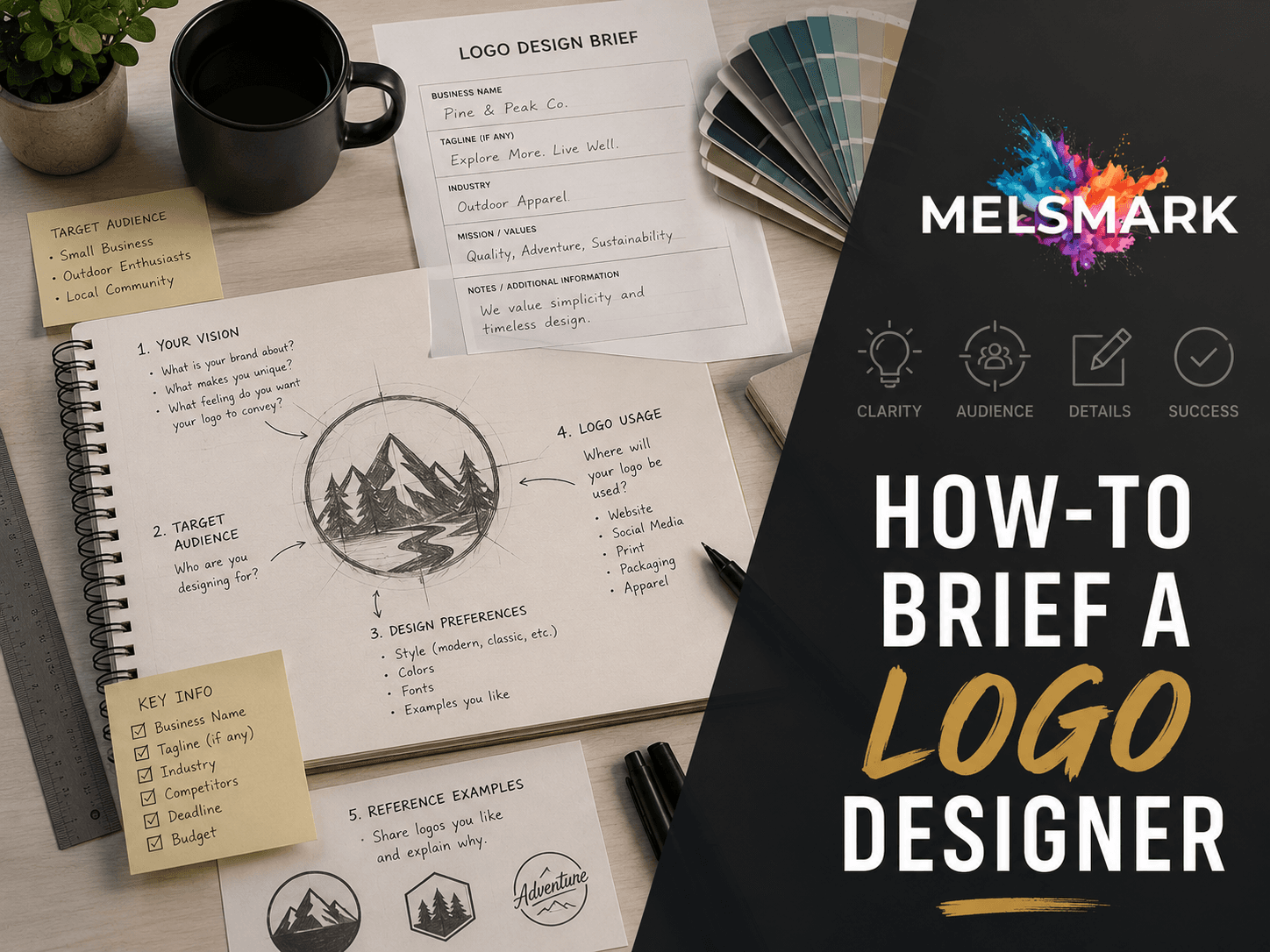
What to Include in Your Logo Brief
Here is what your designer actually needs from you. You do not need fancy design language. Plain, honest answers work best.
- Your business basics. Your name, what you do, how long you have been around, and where you are located. A local shop and a statewide service read differently.
- Your customers. Who buys from you. A logo for a kids' daycare should not look like one for a law firm.
- A few competitors. Point out two or three. This helps your designer make you stand out instead of blending into the crowd.
- Where the logo will live. Your website, a truck wrap, a yard sign, shirts, a tiny social media icon. A logo has to look sharp both big and small.
- Styles you like and dislike. Pull three to five logos you love and two or three you cannot stand. Say why in a few words each.
- Colors. Any you must use or must avoid. If you already have brand colors, share the exact codes.
- Budget and deadline. Be straight here. It shapes everything about the project.
Spend an hour on these answers and you hand your designer a real head start. If you would rather talk it through than fill out a form, that is fine too. You can see how I approach professional logo design and we can shape the brief together.
Where a Good Brief Fits in the Logo Design Process
The logo design process usually runs in a few stages. First is discovery, where your designer reads your brief and asks follow-up questions. Next comes sketching and rough concepts. Then you review, give feedback, and the designer refines. Finally you get your finished files.
Your brief powers that very first stage, and the whole thing rides on it. The clearer the brief, the fewer revision rounds you need. A vague brief leaves the designer guessing, and guessing costs you both time and money. A sharp brief means the first concepts show up close to what you had in mind.
This is true of hiring any creative pro, not just a logo designer. If you have ever wondered what to expect when you hire a web designer, the pattern is nearly identical. Clear input up front leads to work that actually fits your business.
Common Mistakes to Avoid When Briefing a Designer
A few things trip up small business owners more than anything else:
- Asking for too many concepts. More is not better. Three strong directions beat ten weak ones every time.
- Copying a big brand. You are not Nike. Your logo should fit your business and your town, not a billion-dollar company.
- Vague feedback. "I don't like it" does not give the designer anything to work with. "It feels too cold and corporate" does.
- Changing direction halfway. Trust the plan you set in the brief. Big pivots mid-project add cost and drag everything out.
Bringing It All Together
A good brief is the difference between a logo design process that feels smooth and one that drags on for weeks. Answer these questions honestly up front, and you give your designer everything they need to get it right early. You end up with a logo you are proud to put on your sign, your website, and everything in between.
Frequently Asked Questions
How long does the logo design process take?
Most small business logos take about two to four weeks from brief to final files. It depends on how quickly you send feedback and how many revision rounds you need. A clear brief up front keeps you on the shorter end of that range.
What files should I get from my logo designer?
You should receive your logo in a few formats. Ask for a vector file, like SVG or EPS, that scales to any size without going blurry, plus PNG and JPG versions for everyday use. It also helps to get a version that reads well on dark backgrounds.
Do I need a logo before I build my website?
It helps to have your logo first, since it sets your colors and overall look. It is not required, though. Plenty of small businesses tackle branding and their website together so everything matches from day one.
Ready to get a logo that actually fits your business?
I'm a web and graphic designer based in East Bethel, MN. I work with small businesses in Forest Lake, North Branch, Wyoming, and communities across the region to build clean, professional branding and websites that actually bring in customers.
Let's talk about your project. Contact me